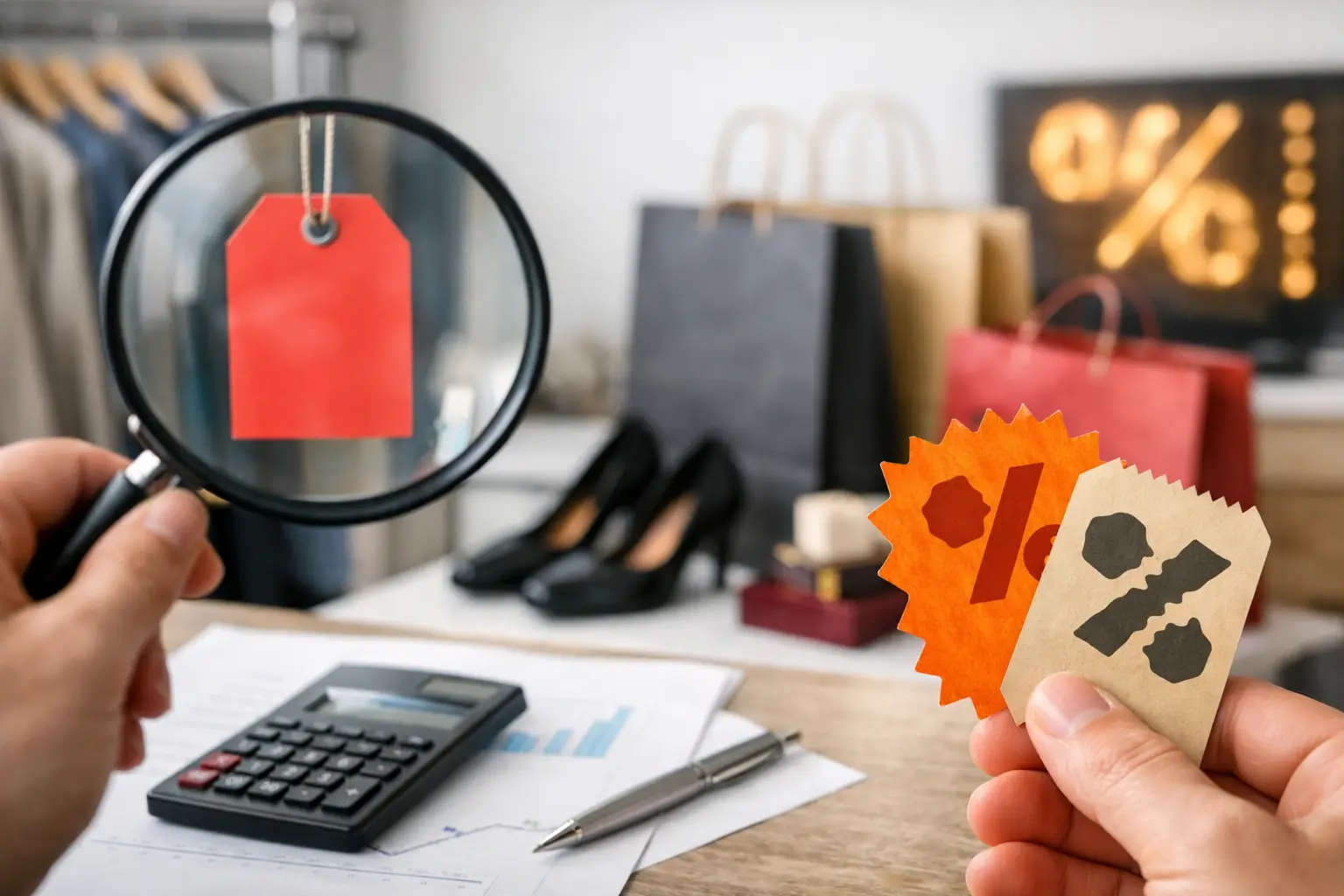
That “was £79.99, now £24.99” banner can feel like a win before you’ve even looked properly. And that is exactly why fake discounts work. They create urgency first, then hope you’ll skip the boring bit – checking whether the saving is actually real.
If you shop online often, especially during flash sales, seasonal events and big retailer promos, knowing how to spot fake discounts can save you more than any voucher code ever will. A bad deal dressed up as a bargain is still a bad deal. The trick is learning what to check in under a minute.
How to spot fake discounts before you buy
The first thing to look at is the price history, not the red sale badge. Some retailers show a huge percentage off based on a recommended retail price that has not been used in ages, or perhaps was never the true selling price for long. If an item is supposedly half price but has been hovering around the same lower figure for weeks, that discount is doing more marketing than saving.
This is where regular deal hunters usually have an edge. When you watch prices often, you start to recognise patterns. You notice when a kettle always seems to be “reduced”, when a skincare bundle keeps bouncing between two prices, or when a toy suddenly goes up just before a weekend sale. A discount only matters if the lower price is genuinely lower than normal.
Another easy giveaway is a dramatic countdown timer paired with a very ordinary price. If the offer is screaming “ends in 10 minutes” but the item has been sitting at that price all week, the urgency is fake even if the price technically isn’t. Timers can be useful, but they can also be there to rush you past common sense.
Check the reference price, not just the sale price
A lot of misleading discounts rely on one simple trick: making the original price look impressive. That reference price might be an old launch price, a manufacturer RRP, or a figure used by a third-party seller rather than the current market rate.
Say a set of headphones is listed at £59.99, down from £119.99. It sounds brilliant. But if most shops have been selling it around £64.99 for months, then the real saving is tiny. The discount percentage is inflated, even if the item is a little cheaper today.
This matters most in categories where prices move constantly, like electronics, beauty, toys and household essentials. Retailers know shoppers compare percentages faster than actual market value. That is why a bold “50% off” can outperform a quieter but more honest “save £5”.
When the old price looks unusually high, pause for a second. Ask yourself whether you’ve ever actually seen the item sold at that price. If not, treat the discount figure with a bit of suspicion.
Look for price jumps before a sale
One of the oldest tricks in the book is the pre-sale price rise. A retailer pushes the price up shortly before a promotion, then drops it back down and calls it a major saving. On paper, it looks like a discount. In reality, you are often paying roughly what customers paid before the sale circus started.
This happens around Black Friday, Boxing Day, bank holiday events and category-specific promotions. Not every retailer does it, but enough do that it is worth watching for. If something was £29.99 last month, jumps to £44.99 for a week, then returns to £29.99 with a “33% off” label, you have not found a bargain. You have found creative presentation.
This is also why the best deal hunters don’t get too attached to retail calendars. A sale event does not guarantee the lowest price. Sometimes the better price appears on an ordinary Tuesday with no fuss at all.
Watch for multi-buy deals that change the maths
Fake discounts are not always fake in a strict legal sense. Sometimes they are just designed to sound better than they are. Multi-buy offers are a good example.
“Buy 2 save 25%” can be decent if you needed two anyway. If you only wanted one, it is not a saving at all. The same goes for bundle offers where a retailer groups together products you would not normally buy at once. The discount looks generous, but your basket total climbs.
A good rule is to calculate the cost per item and compare it with the usual standalone price. This is especially useful for groceries, toiletries, pet supplies and baby products, where pack sizes and bundle formats can make weak deals look stronger.
How to spot fake discounts in product pages
Product pages are built to sell fast, so the clues are often hiding in plain sight. If the discount is real, the details usually hold up. If it is shaky, the wording often gets vague.
Watch for phrases like “worth up to”, “compare at” or “exclusive value”. These can be fine, but they can also signal that the crossed-out price is not a real previous selling price. A beauty gift set marked as “worth £80” may simply be adding together individual items at full RRP, even though sets like that rarely sell for the total claimed.
Also check whether the product itself has changed. Retailers sometimes compare a current bundle, limited edition or different size against a price from a non-equivalent version. That makes the discount look bigger without offering the same thing.
Reviews can help here too. If shoppers from two months ago mention buying the item at nearly the same price, today’s “massive saving” may not be all that massive. You do not need a spreadsheet. You just need enough context to avoid buying into the headline.
Be careful with marketplace sellers
Marketplace listings can be brilliant for variety, but they also need a bit more scrutiny. Some sellers use inflated reference prices, odd product titles or constantly shifting discounts to stand out in crowded results.
That does not mean every marketplace offer is dodgy. It means the discount claim is only one part of the picture. Check the seller rating, delivery costs, product size and whether the item is actually the exact version you want. A cheap price can stop looking cheap once postage is added or when you realise the pack is smaller than expected.
This is where curated deal platforms can save you time. On https://Priceglitchesuk.com, shoppers can browse fresh offers in one place instead of checking retailer after retailer manually. That does not replace your own judgement, but it does make it easier to spot when a price genuinely stands out.
The difference between a fake discount and a weak deal
Not every disappointing offer is a fake discount. Sometimes the price really has dropped, just not by enough to matter. That distinction is worth making.
A fake discount usually relies on misleading comparison points, inflated old prices or forced urgency. A weak deal is more straightforward. The retailer has reduced the item, but the saving is small, the product is overpriced to begin with, or a better offer exists elsewhere.
For shoppers, the result can feel the same – you thought you were getting a bargain and you weren’t. But understanding the difference helps you shop smarter. If a deal is weak, it might still be worth it if you need the item now, trust the retailer or want the convenience. If the discount itself is misleading, that is a stronger sign to walk away.
A quick reality check before checkout
Before you press buy, ask yourself three things. Is this lower than the usual selling price? Would I still want it without the discount badge? Am I buying because I need it, or because the timer and percentage have got to me?
Those questions sound simple, but they stop a lot of poor purchases. Retailers are very good at making a discount feel like a deadline and a missed opportunity feel like a mistake. Most of the time, another deal will come along. Often a better one.
The best bargain hunters are not the ones who buy fastest. They are the ones who stay calm, compare properly and know that a real saving should hold up even after the excitement wears off.
Next time a price looks almost too good, give it one extra minute. That small pause is often where the real savings start.
Discover more from Price Glitches UK
Subscribe to get the latest posts sent to your email.